Echoes of Print: Where Print Became Practice
Echoes of Print: Where Print Became Practice
Collateral Event of the 3rd Print Biennale India 2026, Delhi Lalit Kala Academy, New Delhi
INTRODUCTION
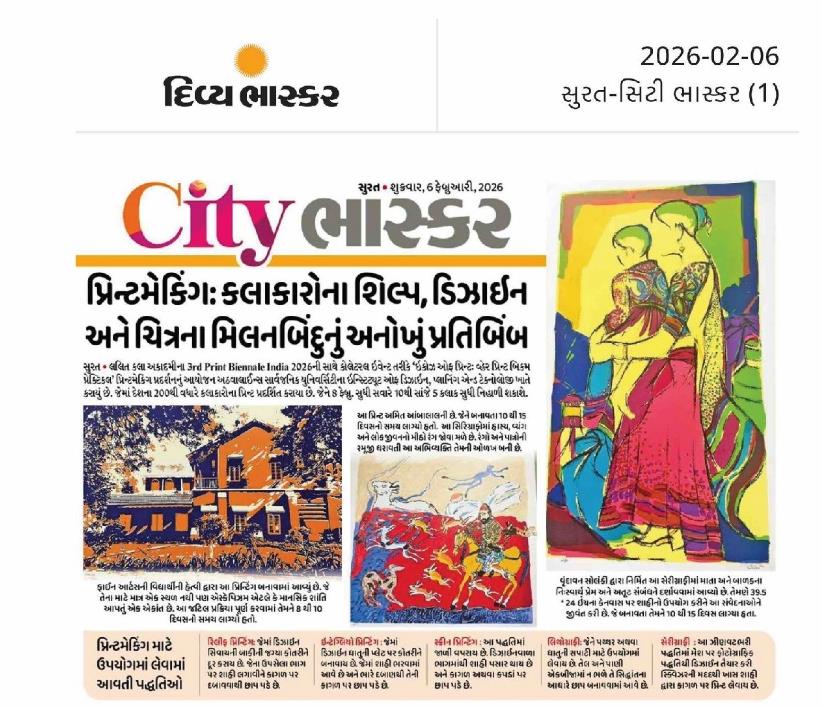
Sarvajanik School of Fine Arts, MITRAJ–IDPT, Sarvajanik University, Surat, organized an exhibition titled “Echoes of Print: Where Print Became Practice” as a collateral event of the 3rd Print Biennale India 2026, initiated by Lalit Kala Academy, New Delhi. The exhibition was held from 3rd February to 8th February 2026 within the premises of Sarvajanik School of Fine Arts under the guidance of Principal Prof. Persi Engineer and was curated by Prof. Rajarshi Smart. The initiative aimed to create a meaningful platform where students, practicing artists, and established printmakers could collectively engage with the processes, ideas, and evolving practices of printmaking.
The exhibition sought to foreground printmaking not merely as a technical discipline but as a vibrant contemporary artistic language. In the context of rapidly transforming cultural and technological environments, printmaking continues to function as a space for experimentation, reflection, and conceptual exploration. The exhibition therefore positioned printmaking as both an educational and artistic practice, connecting studio learning with professional artistic production.
CONCEPT AND CURATORIAL APPROACH
The curatorial idea behind “Echoes of Print: Where Print Became Practice” was to explore the dynamic nature of printmaking and its ability to bridge tradition with contemporary artistic expression. Printmaking has historically been associated with reproduction, yet contemporary artists have expanded its scope by engaging with the medium through experimentation, material exploration, and conceptual thinking. Techniques such as etching, serigraphy, relief printing, and hybrid print processes allow artists to work with repetition, layering, and surface interaction, enabling them to express complex narratives related to identity, memory, environment, and lived experience.
The exhibition was conceived as an educational and experiential space where viewers—particularly students—could understand how prints are created, developed, and presented within a professional artistic context. The display was structured in such a way that the processes of printmaking were clearly communicated through visual examples, artworks, and explanatory elements. This approach transformed the exhibition into a learning environment where artistic practice and pedagogy intersected.
EXHIBITION DISPLAY AND PARTICIPATING ARTISTS
Significant highlight of the exhibition was the systematic and educational display of printmaking techniques. Works by contemporary artists, art educators, and students of Sarvajanik School of Fine Arts were presented together, creating a dialogue between emerging and established practices.
The display was structured around the four primary categories of printmaking:
Relief Printing: This section included woodcut and linocut prints, demonstrating bold contrasts, textural richness, and the expressive potential of carved surfaces.Intaglio Printing: Techniques such as drypoint, aquatint, and viscosity printing were showcased. These works highlighted tonal gradation, intricate line quality, and the depth achievable through etched surfaces.
Planography: This category reflected the principle of surface-based printing, emphasizing the chemical relationship between image and non-image areas.
Serigraphy (Screen Printing): Serigraphs demonstrated precision, colour layering, and the adaptability of the medium in contemporary artistic practice.
In addition to these primary categories, the exhibition also featured collagraphs and monoprints, representing experimental and hybrid approaches to printmaking. These works expanded the boundaries of traditional techniques, showcasing innovation through material exploration and process variation.
The display was designed to clearly communicate the stages of printmaking, including plate preparation, inking, and printing. This process-oriented approach enabled viewers to understand the technical and conceptual journey behind each artwork.
The exhibition also included prints by several contemporary Printmakers like Jagdish Tamenini, Chandrashekhar waghmare, Jyoti Bhatt, Alok Prabhakar , and academicians from across India. Printmakers such as Sunil Darjee, Debraj Goswami, Durgaprasad Bandi, Rajarshi Smart, Jasmine Kaur, Naishadh Jani, Krushnapriya Smart, Abhishek Mandala, Kunjan Goswami among others, were represented in the display. Their works introduced students to diverse artistic approaches and visual languages within contemporary printmaking, highlighting how artists today use print techniques to explore conceptual and social themes.
The exhibition was designed so that visitors could also understand the technical processes behind the prints. Various stages of printmaking, including plate preparation, inking, and printing methods, were explained through visual material and process-based displays. This helped viewers appreciate the relationship between the technical and conceptual dimensions of printmaking. A significant section of the exhibition focused on Serigraphy as a High Art Practice in Gujarat, highlighting the important contributions of artists and studios that have elevated the medium within the field of fine arts. Although serigraphy has often been associated with commercial printing, several artists and educators in Gujarat have redefined it as a sophisticated artistic medium capable of expressing complex visual and conceptual ideas.This section featured serigraph prints from the collection of Archer Art Gallery, 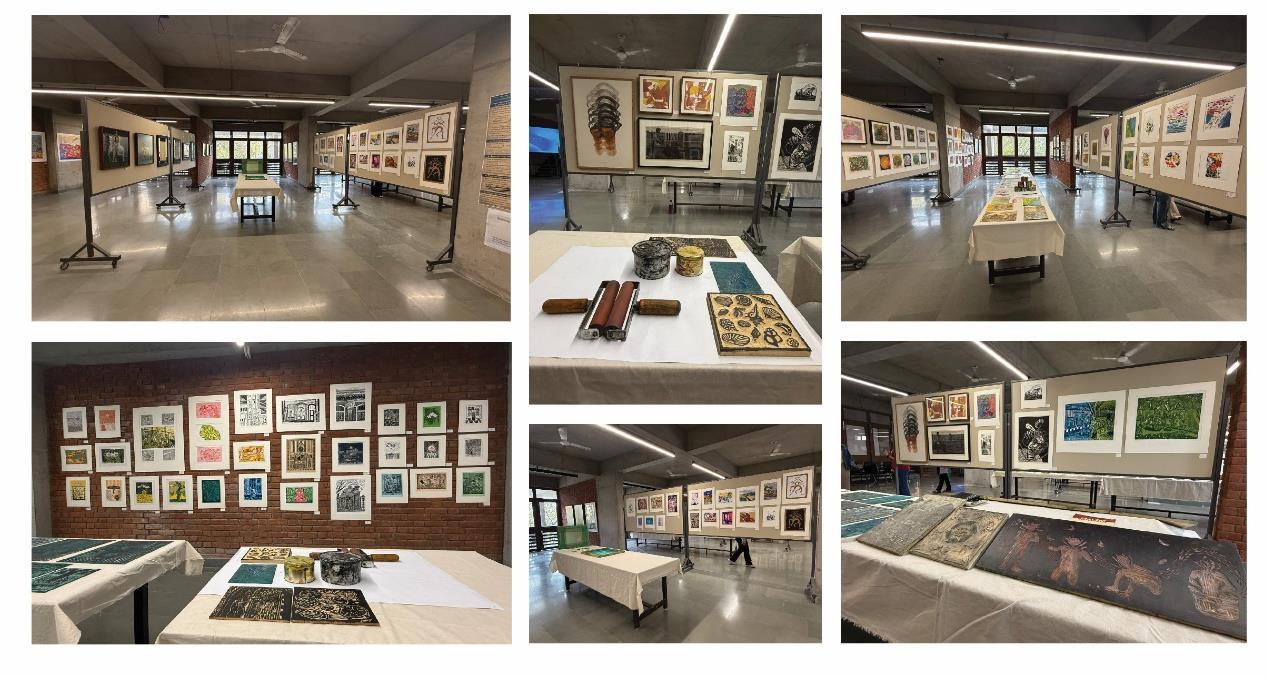 Ahmedabad, which demonstrated the artistic possibilities of the medium. Works by prominent artists such as Jyoti Bhatt, Vrindavan Solanki, Manu Parekh, Amit Ambalal, and Haku Shah were displayed as part of this segment. These works illustrated how serigraphy can function as an expressive artistic language through the use of layered colour, surface interaction, and carefully structured compositions.
By presenting these works within the exhibition, the display acknowledged the historical and contemporary role of Gujarat in shaping the development of serigraphy as a fine art practice. The section also provided students with an opportunity to observe high-quality serigraph prints and understand their technical and conceptual complexity.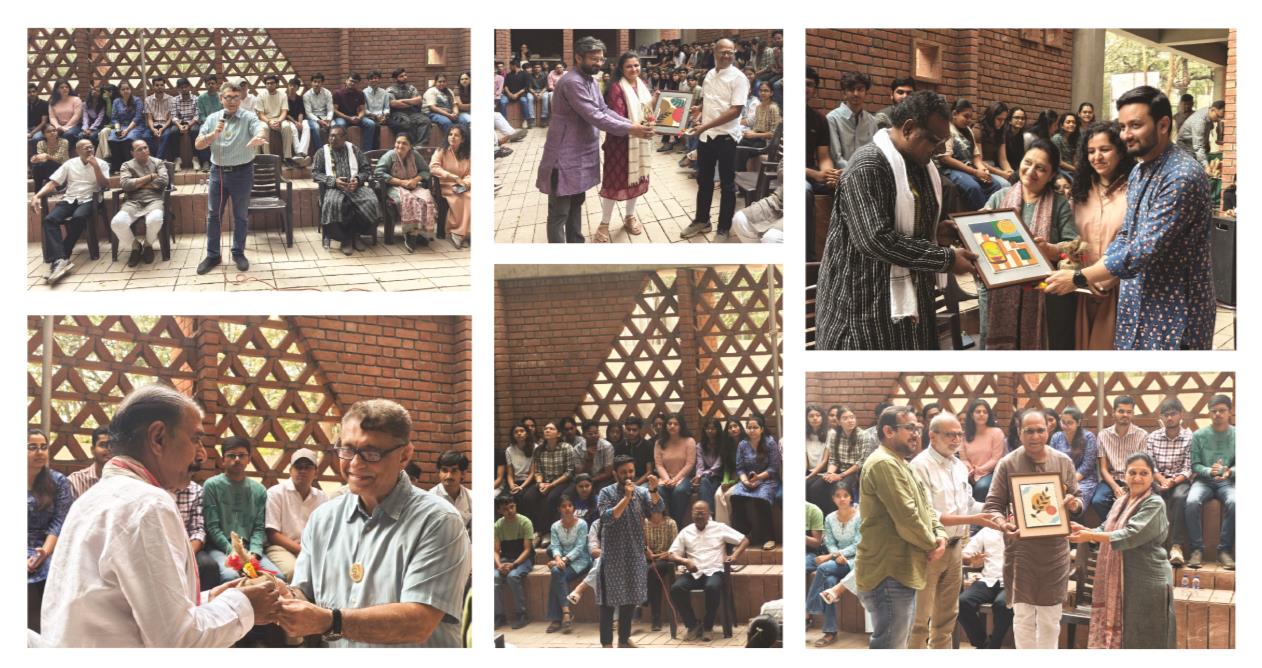
WORKSHOPS AND ARTIST INTERACTION
As part of the broader activities associated with the Print Biennale, a Printmaking workshop on the Etching Reduction Process was conducted by Durgaprasad Bandi at MS-IDPT. The workshop offered students practical exposure to the processes involved in etching, including plate preparation, acid biting, reduction techniques, and the final printing stage. Through hands-on engagement with materials and tools, students gained valuable insights into the technical discipline required in printmaking. Another important highlight of the event was an Artist Talk by renowned serigrapher and art collector Anil Relia, founder of Archer Art Gallery, Ahmedabad. His talk, titled “A Passion for Precision: Life, Art and Experience,” focused on his journey as a master serigrapher and his collaborations with some of India’s most celebrated artists. The talk provided students with a deeper understanding of the role of professional print studios in producing high-quality artworks and preserving important artistic legacies.
EDUCATIONAL SIGNIFICANCE
The exhibition played an important role in strengthening the academic environment of Sarvajanik School of Fine Arts by connecting classroom learning with professional artistic practice. By presenting a wide range of prints and process-based displays, the exhibition enabled students to develop a deeper understanding of the medium and its creative possibilities. More importantly, the exhibition emphasized the idea that printmaking is not only a technical process but also a collective and collaborative artistic practice. Knowledge in printmaking is often transmitted through mentorship, shared studio practices, and collaborative experimentation. The exhibition therefore highlighted the role of educational institutions in nurturing artistic communities and encouraging dialogue between students, teachers, and professional artists.
CONCLUSION
“Echoes of Print: Where Print Became Practice” successfully created a meaningful platform for exploring the artistic, technical, and pedagogical dimensions of printmaking. By bringing together student works, contemporary artists, and historically significant serigraph prints, the exhibition demonstrated the richness and diversity of printmaking as an evolving artistic medium. As a collateral event of the 3rd Print Biennale India 2026, the exhibition reinforced the growing contribution of Sarvajanik School of Fine Arts and the broader printmaking community of Gujarat to contemporary Indian art discourse. Through its carefully curated display and educational approach, the exhibition affirmed that printmaking continues to remain a dynamic and relevant medium that connects tradition, experimentation, and contemporary artistic expression.
PHOTOGRAPHS OF THE EVENT